Eczema Journey: 2nd Grade — The Year He Was Braver Than He Knew

Updated: Sep 22
Part 4 of My Son’s Eczema Journey Series
By second grade, eczema was no longer something that flared up from time to time.
It had become part of our daily lives.
Every decision seemed to revolve around it.
What he wore.
What he ate.
How he slept.
Whether he could attend school.
Whether he could swim.
Whether he could even take a bath comfortably.
The summer before second grade, we were still searching for answers.
We continued experimenting with elimination diets.
Milk.
Eggs.
Gluten.
Anything that might offer relief.
The challenge was that my son was already a picky eater.
Many of the foods we eliminated were foods he genuinely enjoyed.
Before we discovered the citric acid connection, he could sit and eat five or six tangerines in a single sitting. They were one of his favorite foods.
One by one, the choices available to him seemed to shrink.
The elimination diets weren't the only challenge.
We still had to avoid citric acid whenever possible.
That proved far more difficult than it sounded.
It seemed to be everywhere.
Food.
Candy.
Drinks.
Cleaning products.
Sometimes it was obvious.
Sometimes it wasn't.
We spent more and more time standing in grocery store aisles reading ingredient labels.
Before long, my son became just as good at it as I was.
Nothing felt simple anymore.
As second grade began, his eczema continued to spread.
The backs of his knees.
His ankles.
His shins.
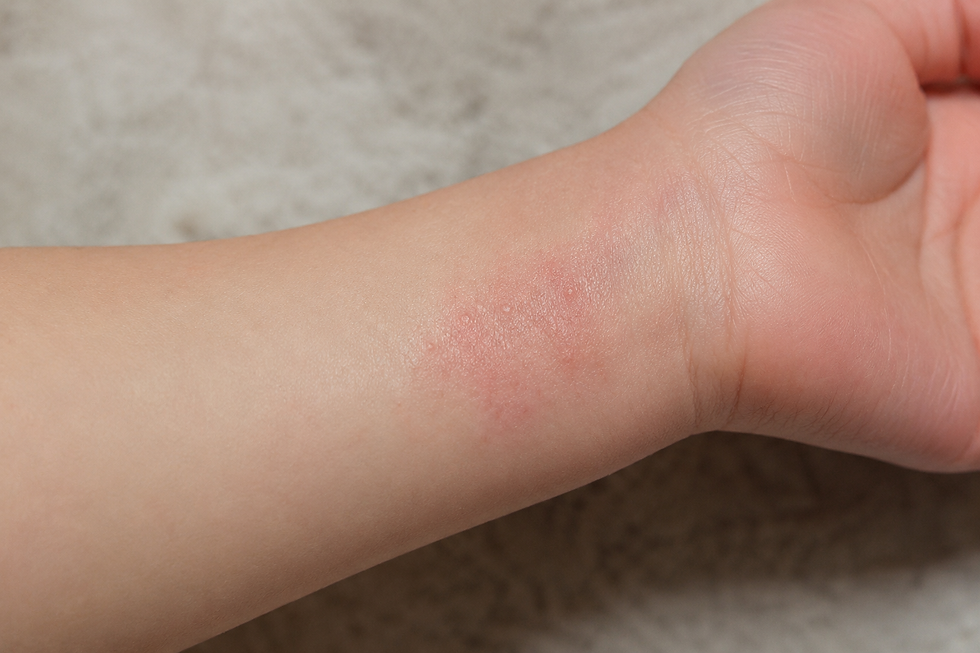
His wrists.
The insides of his elbows.
His neck.
His ears.
His torso.
His back.
And now his face.
Some days his eyelids became so raw that the skin tightened around them.
At night, his eyes would not fully close while he slept.
The irritation became constant.
Sleep became a struggle.
And when sleep suffers, everything else follows.
He missed a lot of school that year.
Some days he simply couldn’t get comfortable.
Other days he hadn’t slept enough to make it through a full day.
At first, the school was understanding.
The nurse checked in often and did everything she could to help.
But as the absences increased, the calls increased too.
Why was he out again?
When would he be back?
To them, they were simply doing their job.
To me, they were adding undue stress to an already overwhelming situation.
What I didn’t know then was that this would become the beginning of many years spent explaining chronic illness to schools that could see the absences but not always the suffering behind them.
One of the hardest losses that year involved something he had always loved.
Water.
At two years old, if he noticed it was raining outside, he would come running out with his rain boots and raincoat on, ready to splash in puddles and play.
We had a pool at home, and he practically lived in it.
He started swim lessons at three months old and grew into an excellent swimmer.
We also lived less than five minutes from the beach.
Swimming wasn't something we did occasionally.
It was simply part of life.
If there was water nearby, my son wanted to be in it.
He even talked about becoming a scuba diver someday like his dad.
But by second grade, water had become something entirely different.
Baths hurt.
Pools hurt.
Even the ocean he loved became difficult.
What had once brought him joy now often left him miserable.
Watching him pull away from something he loved was heartbreaking.
The bathing became one of the biggest points of tension between us.
By then, the infections were becoming more frequent, and I was scared.
Terrified, really.
I begged.
I pleaded.
And sometimes I yelled.
Not because I was angry.
Because I was afraid.
Afraid of the infections.
Afraid of what could happen if they spread.
Afraid of MRSA.
There were a few times I insisted he get into the tub.
Only to let him right back out again because I could see the pain on his face.
Later, I apologized.
I explained that my fear had gotten the better of me.
Looking back, I probably shared more information than a child needed to know.
But my son had always been mature for his age, and understanding the seriousness of the situation often helped him face things that scared him.
Around this same time, I began noticing something else.
My son wasn’t growing the way many of his classmates were.
While other children seemed to shoot up overnight, he remained noticeably smaller.
I brought my concerns to Dr. Vic.
He explained that his body was fighting a constant battle.
The inflammation.
The infections.
The lack of sleep.
The energy required to heal.
It all took a toll.
His lymph nodes were often enlarged during flares, another visible reminder of how hard his body was working.
Looking back now, Dr. Vic was right.
He eventually caught up and is now nearly as tall as his father.
But at the time, it was one more thing to worry about.
The infections became one of the most frightening parts of second grade.
What had started as occasional infected patches became more frequent.
There were really two different types.
One was a more general skin infection that spread across open, scratched eczema areas.
These were weepy with honey colored crust, and itchy in a different way.
The other were extremely painful cyst-like bumps.
By then, both my son and I had learned to recognize the signs.
Those were almost always MRSA.
The infections appeared in different places throughout the year.
His face.
His elbows.
His legs.
His ear.
The bridge of his nose.
Inside of his nose.
The back of his knees.
One of the hardest moments came when a lump began growing on the side of his neck.
At first, Dr. Vic monitored it and prescribed antibiotics.
We hoped it would resolve on its own.
Instead, it continued growing.
Eventually it became larger than a marble.
Painful.
Red.
Angry.
As Christmas approached, his antibiotics had run their course and the lump was still there.
I worried about heading into the holiday with a worsening infection and fewer options for medical care if something changed.
It was clear we couldn't wait any longer.
We ended up at urgent care with a doctor we already knew well.
Dr. Anderson had treated my son for years.
He had seen him after childhood accidents and injuries.
There was comfort in seeing a familiar face.
The infection had to be drained.
He numbed the area and lanced it.
A drain was placed to keep it open so it could continue healing.
He would need more antibiotics and follow-up visits afterward.
I know he was scared.
I was too.
The entire time he squeezed my hand as hard as he could.
But he didn’t pull away.
He didn’t fight.
He didn’t cry.
He trusted the doctor.
And he let him do what needed to do.
When it was over and we were home, he smiled for a photograph with a large bandage on his neck and gave a thumbs up.
More than anything, he was relieved.
The procedure hadn't been nearly as bad as he had imagined.
And once the pressure was gone, he felt so much better.
Looking back, I realize how brave he was.
Not because he wasn't afraid.
Because he was.
And he did it anyway.
By then, we had all learned to adapt in different ways.
At one point, I even developed a MRSA infection myself.
I suspect it happened after bathing him one evening when one of his abscesses had drained.
I always cleaned and disinfected the tub afterward.
That night, I must have missed something.
Later, I took a bath myself.
When the painful lump appeared a few days later, I knew immediately what it was.
Another thing people don't often think about is the amount of skin involved when eczema becomes severe.
By this point, he was shedding skin constantly.
It covered his bedding.
The floor around his bed.
His room.
Because of the dust mite allergy, it couldn't simply be ignored.
Skin feeds dust mites.
Dust mites worsened the eczema.
The cycle continued.
It also affected our laundry routine.
I washed his clothes after every use, including jackets and sweatshirts. Once the shed skin dried, it became rough and irritating on its own.
Because of the frequent skin infections and MRSA, I usually washed his laundry separately from the rest of the family's as an added precaution.
His bedding was washed at least weekly and often more frequently.
During infections, there were times I washed sheets daily.
The goal wasn't perfection. It was simply trying to reduce anything that might make things worse.
I vacuumed every day.
The bed.
The floors.
The areas around where he spent time.
Looking back, it sounds overwhelming.
At the time, it simply felt necessary.
I would have done far more if I thought it would help him.
I would have done anything.
Around this time, another discovery happened by accident.
I was folding laundry and laying his clothes across the back of his little recliner so I could hang them up.
One shirt fell onto the floor.
When I leaned over to pick it up, my face came close to the recliner, and I smelled something terrible.
Almost like very stinky cheese.
The smell was coming from the chair.
Then I picked up the clothes I had just laid across it to see if the chair had made them smell too.
That was when I realized the clothes already smelled.
The hoodies.
Some of the mixed-fabric T-shirts.
Anything that contained polyester seemed to carry the same odor.
Later, I would understand it was bacteria that had not been fully washing out of the fabric.
That same day, I went through his closet and threw away the mixed-fabric tees, hoodies, socks, underwear, and the recliner.
The next day, we went shopping for 100% cotton and linen clothing.
And for the first time in a while, we noticed another small improvement.
Not a cure.
Just another piece of the puzzle.
Another thing that helped.
There were sweet moments too.
Most evenings, my son would lay on the couch with his head in my lap.
I would gently rub his forehead with a washcloth or carefully remove skin that was already loose.
His eyelids often needed the same attention.
It became part of our routine.
Years later, my children told me something I never knew at the time.
Because they shared a bedroom, there were nights after everyone had gone to bed when James would ask Abigail for help.
Sometimes he would ask her to help remove the loose skin around his eyelids or other places that were bothering him.
She would sit beside him and patiently help.
Because her brother needed help.
And because she loved him.
It's one of those quiet acts of kindness between siblings that I never knew was happening.
Second grade wasn’t all doctors and infections.
He still found ways to be a kid.
Near the end of the school year, he asked two friends to join him in the school talent show.
The three boys stood on stage telling jokes.
Mostly teacher jokes.
School jokes.
The audience laughed the entire time.
Afterward, the parents of his friends told me they didn’t think their sons would have gone on stage without him.
My son made them feel brave enough to try.
I smiled when they said it.
Because it was exactly like him.
Even during one of the hardest years of his life, he was still helping other people feel comfortable.
Still making people laugh.
Still finding ways to connect.
That summer, we took a family camping trip to Yosemite.
By then, his eczema was worse than it had ever been.
His forehead.
His eyes.
His ears.
His neck.
His hands.
It was impossible to hide.
While visiting a gift shop, he picked out a National Parks Monopoly game.
As the cashier rang it up, I noticed tears forming in her eyes.
My son had already wandered off to look at something else with his sister.
Quietly, she looked at me and said,
"Your son is beautiful. It breaks my heart because that was me when I was his age."
Then she rolled up her sleeve.
Underneath was eczema.
As we talked, we both fought back tears.
She told me her eczema had been just as severe as his when she was young.
Before we left, she quietly applied her employee discount to the game.
It was such a sweet gesture, and a moment of connection I never forgot.
When we left the store, I told my son what she had said and what she had done.
Without hesitation, he turned around, ran back inside, hugged her, and thanked her.
I still smile when I think about it.
For the first time in a long time, I could see a future beyond second grade.
We weren’t finding answers yet.
We were surviving.
But for a brief moment, I was reminded that surviving and healing are not always the same timeline.
Sometimes hope arrives first.
Reflection
When I think about second grade now, I don't just think about eczema.
I think about fear.
My son's fear.
And my own.
There were moments that year when I wasn't at my best.
I was scared of the infections.
Scared of MRSA.
Scared of what might happen if things got worse.
Sometimes that fear came out as pleading.
Sometimes it came out as frustration.
And sometimes it came out as yelling.
There were moments I pushed too hard.
Moments I insisted on things that I thought would help, only to realize later how much pain they caused.
What I remember most isn't those mistakes.
It's what happened afterward.
I apologized.
Not because saying sorry erased the hurt or made my actions okay.
But because I wanted my son to understand something important.
Parents are human too.
We make mistakes.
We get scared.
We don't always get it right.
What matters is being willing to own those mistakes, learn from them, and try to do better.
I wanted him to know that every decision I made came from love, even when fear sometimes got in the way.
Looking back, I think those conversations mattered.
Not because they made either of us perfect.
But because they helped us trust each other.
And sometimes trust is built not through getting everything right, but through how we repair things when we don't.
Second grade taught me many lessons about eczema.
But it also taught me something about parenting.
Love isn't being perfect.
Love is continuing to show up, continuing to learn, and being willing to say, "I was wrong," when it's needed.
A Gentle Invitation
Think about a challenge you or someone you love has faced.
Not a challenge that was conquered overnight, but one that lingered.
One that changed routines, required adjustments, or made life more complicated than you expected.
What strengths emerged during that season?
What qualities grew that might not have developed otherwise?
You don't have to be grateful for the hardship itself.
But perhaps there is something meaningful in recognizing the resilience, compassion, patience, or courage that grew alongside it.
Take a few moments to reflect on what carried you through.
What We Learned Along the Way
Sleep Matters More Than Most People Realize
When eczema affects sleep, it affects everything else too. Mood, concentration, school performance, healing, growth, and overall well-being can all suffer when a child isn't getting enough rest.
One of the best things we learned was to create the most comfortable sleep environment possible. For us, that meant keeping his bedding clean, washing it frequently, dressing him in soft 100% cotton or linen clothing, and reducing anything that might further irritate his skin. During particularly dry seasons, a humidifier also helped. Small changes didn't eliminate the eczema, but together they often made the nights a little more manageable.
Water Avoidance May Be About Pain, Not Resistance
A child who suddenly avoids baths, swimming pools, or water may not be being difficult. For some children with severe eczema, water can sting, burn, or create hours of discomfort and itching afterward.
Growth Can Be Affected
Chronic inflammation, frequent infections, and poor sleep can place significant demands on a child's body. If growth concerns arise, don't hesitate to discuss them with your pediatrician.
Children Deserve a Voice in Their Care
One of the most important lessons I learned was that my son needed a say in what happened to his body. Including him in decisions helped build trust during a time when we all often felt powerless.
Read Labels, Keep Notes, and Look for Patterns
Triggers aren't always obvious, and they aren't always just one thing. Keeping food logs, paying attention to ingredients, and looking for patterns helped us uncover connections we might have otherwise missed.
What surprised me most was that each discovery didn't "fix" the eczema—it simply removed one more obstacle. One less trigger. One less thing working against his skin.
A better detergent. A clothing change. A trigger identified. A routine adjusted.
Over time, those small discoveries added up. Each one brought us a little closer to a life that was more comfortable and more manageable.
Sometimes healing doesn't happen all at once. Sometimes it happens one piece of the puzzle at a time.
Use Antibiotics Thoughtfully
Antibiotics were sometimes necessary and important for treating my son's infections. Some of those infections required medications that weren't always the same antibiotics commonly prescribed for everyday illnesses.
Over time, I learned that antibiotics are valuable tools, but they aren't without limitations.
Bacteria can become resistant, and some people develop allergies or sensitivities that can reduce future treatment options.
That doesn't mean avoiding antibiotics when they are needed. Some of my son's infections absolutely required them.
It simply means asking questions, understanding why a particular medication is being prescribed, and working closely with your medical team to use these important treatments wisely.
Don't Underestimate What Children Can Carry
Children often understand more than we realize. They can be frightened, frustrated, and discouraged while still showing remarkable courage. Sometimes they are braver than they know.
You are always welcome here.
🌿WGG


Comments